Thursday, June 24, 2021

Gloat: the marketplace unlocking workforce potential for Fortune 500 companies


Fun fact: it seems that I end up investing in a cloud HR company every seven years. The first one in 2007 was Cornerstone OnDemand, the second one was Peopledoc in 2014 and the third one is Gloat in 2021. What all of these companies have in common is the ambition to create a category in the HR space: Cornerstone OnDemand pioneered talent management in the cloud, Peopledoc focused on HR Service delivery in the cloud and Gloat is launching a totally new but very high potential platform - an internal talent marketplace that unlocks the workforce potential of large companies. 

As companies are in the midst of adapting their teams to be more flexible and take advantage of remote working, new tools are needed to optimise productivity and ensure equality of opportunities. Gloat has pioneered the Talent Marketplace to solve that, and it’s now becoming a strategic tool for global enterprises. Some of the world’s largest, most forward-looking companies are already benefiting from the workforce agility enabled by Gloat’s AI-powered platform. As the company today announces its $57m Series C round led by Accel, I sat down with Gloat’s co-founder and CEO Ben Reuveni to discuss what inspired him to set off on this entrepreneurial journey, how he has seen approaches to talent change in light of COVID-19 and much more…‍

Please tell us a bit about founding Gloat, and what inspired you to start the company?‍

I was in Israel’s intelligence unit, surrounded by computer gurus, algorithmic experts, and mathematicians. One day, my boss asked me to spend 10 percent of my time sharpening the algorithm used by the unit to find talent. 

It changed my life. This idea of helping people navigate their career and find their true place was what initially planted the seed. And spending 10 percent of my time doing something I loved was exciting and meant I was much happier and more creative in my day-to-day work. 

After that, I joined a startup in the storage space, which was acquired by IBM. For the first time in my life, I saw what it was like to be a small employee in a large company – there was no transparency, no visibility, and no agility. It took me ages to initiate anything new. After five years, I decided to see what the next step in my career would be. I had two options – explore outside of IBM, or explore internally. 

For some reason, I thought it’d be easier to explore outside of the company, so it was a bit odd when I told the HR department I wanted to find something new inside IBM. They were nervous – they thought I wasn’t happy or satisfied – the whole process was really unstructured. 

It was about this time I met my co-founder, Amichai, at IBM. And that made the decision for me. We left IBM and started Gloat with the idea that, by using data and algorithms, we could help people navigate their careers. We created an external talent marketplace where we helped people move between companies, showing them how they could develop their career and move to the next opportunity.

And after this initial idea, you pivoted? Tell us about that.

Right. Almost four years ago, we saw that -  about 50 percent of the time - the algorithm showed that the next step for candidates on our platform could be within their current company. This was a lightbulb moment. It inspired us to create the first internal talent marketplace, where we could show these employees that they could find their next career step within their company, and help them navigate their career internally. 

Imagine a product where you onboard employees at one end and hiring managers at the other. You let them find each other by using AI and algorithms. We’re controlling every aspect of an employee’s career – whether it’s a part-time project, full-time job, or shadow learning opportunity – we’re trying to show them how they can develop within that company. It was a win-win situation. The company focuses on the employee, and the employee focuses on their career. Everyone’s happy. 

Can you tell us a bit more about how it works? Where do you get the data on the employee to understand their skills? How do you get the data on job postings, potential projects, or mentorship requests?

We learned early on that data is key to our success. But in my first meetings with large companies, I was shocked to find that the executives I met – CEOs and CFOs, for example – had almost no data on their employees. But with our internal marketplace, the first thing that provides value to the employees is the onboarding process – they’re providing rich profiles about their skills, experiences, and projects. After they give us these data points, we can show them all the relevant opportunities that exist within the company. 

We also learned that, to create a successful live marketplace, we had to understand we weren’t alone in that particular ecosystem. We needed to be integrated with a company’s common platform in order to create a seamless experience for employees and managers. We had to be able to pull information on job openings and career opportunities from all of a company’s data silos in order to create an engaging experience that could be deployed in large companies. 

It’s striking that, from the very early days of the internal marketplace, you managed to sign seven figure-deals with very large enterprises from around the world. How did you start building these relationships as a small company in Israel? How do you build that trust and then deploy your solution across their entire employee base?

Large organisations are often misunderstood as being late adopters of new technologies. But I think it’s the complete opposite. We learned that big organisations have big challenges, and they’re looking for partners to help solve them. 

The Unilever team, for example, knew they had a challenge. They knew they wanted to break the silos within their talent organisation, and were looking for the right startup to help them do that. Gloat was that startup. We began by establishing a trusted relationship where, rather than a vendor, they saw us as a true partner – we’d learn from them, they’d learn from us. And this mutual relationship led to a successful deployment.

Everyone knows everyone in the large enterprise ecosystem so, after we won our first big client, it was easier to win the second, third, and fourth. Everyone was speaking about the impact and success of our solution. I’m proud that we put so much effort in at the beginning. It was so rewarding in the end. 

This was pre-pandemic. COVID really shifted the way people think about work. How did this impact the way people thought about internal talent marketplaces? 

I think everyone’s asking that question right now. But the fact is, the world has changed, and it’s not going to be the same as it was pre-COVID.  

The impact on Gloat has been interesting. Before COVID, we were telling enterprises how important it was to focus on their internal talent. Then, during the pandemic, companies realised they couldn’t rely as heavily on external resources any more. They needed to focus more on their most valuable assets – the talent within the company. Our clients were asking if we could scale to their entire company within two weeks. So many companies have had to adapt their business models during and post-COVID. They needed to be more agile, and were using our product to reallocate talent from under-utilised to over-utilised departments within their business. 

We’re excited about our future. Companies have realised the importance of focusing internally, and we’re seeing that in our pipeline. Rather than a nice-to-have, we’re now essential. 

Gloat has grown and hired very fast in the last 18 months. Any tips for other founders going through hyper-growth on how to find and retain the right person, and make sure they’re a cultural fit?

Our entire philosophy is that people are everything. And not just when it comes to creating a product. It’s part of our core culture – from the interview process to the effort we put into understanding if there’s a cultural fit. 

Everyone’s working remotely right now, so we’re focusing on connecting people together and creating one team. I do bi-weekly Zoom meetings, for example, where everyone can join and ask questions and give feedback. We’ve also deployed our product within Gloat, creating an internal marketplace that’s helped get people working together on the same project – remotely. In fact, our first live conference was created by a project team put together within our internal marketplace. 

To other founders, I’d say it’s time to show you employees they can develop their career within the company – even if they’re working from home. It’s also important for founders to take advice from other CEOs. I like to surround myself with a bunch of successful CEOs and get their advice and perspective on different things.

Being an entrepreneur is hard. How do you cope with the pressure? Any tips on how you organise your time and balance the company, your personal life, and just making everything work?

My secret is my wife. She’s the total opposite of me, and she’s really helped me focus on getting some family time. That’s something I’m always struggling with – especially post-COVID, because we’re all working all the time. But family time’s important to me – the family makes me happy and excited, so I know I’m working for an even greater purpose. 

Monday, May 24, 2021

Salto - Bringing DevOps to Cloud App Configuration


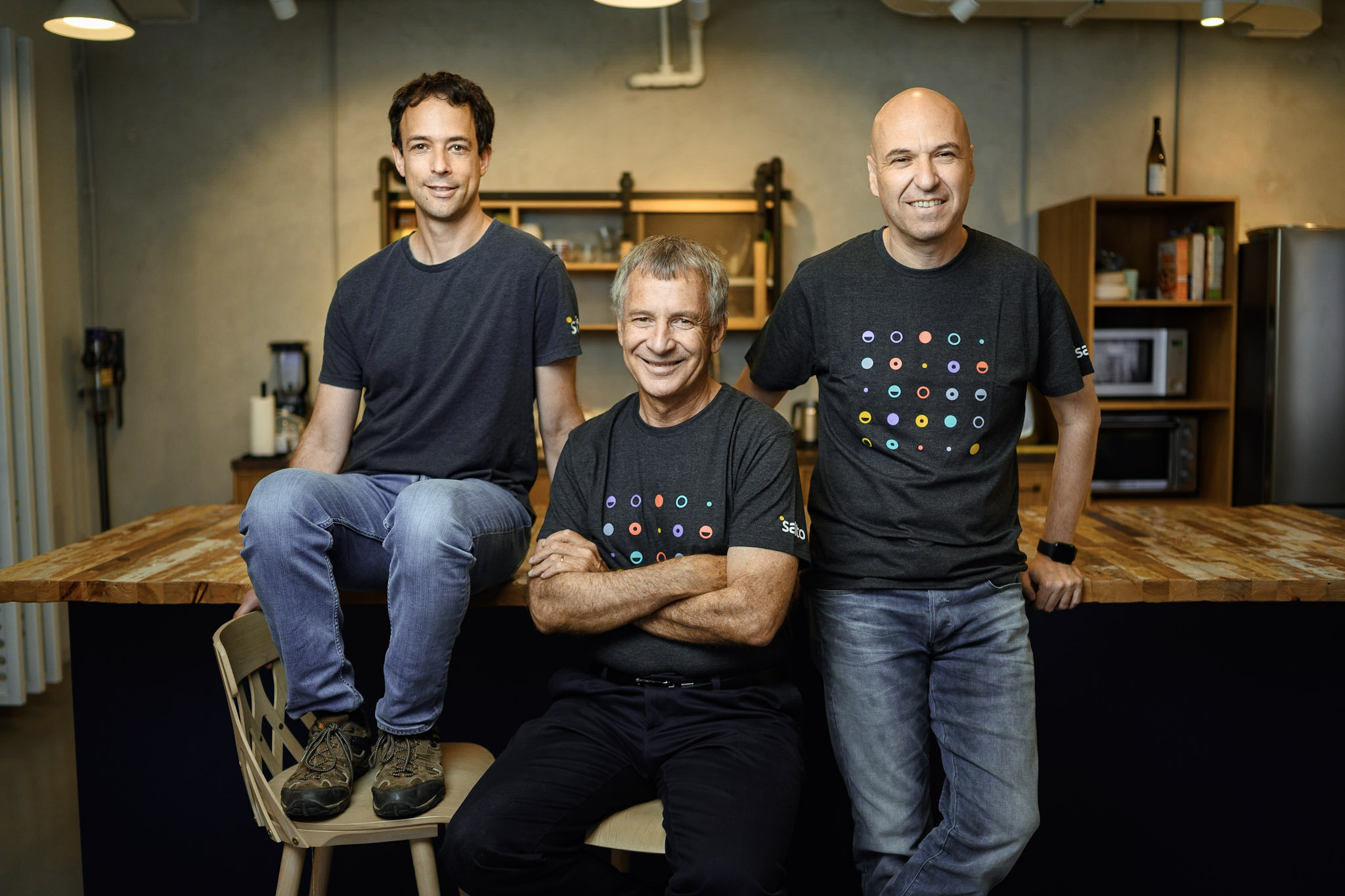
Team Salto in their Tel Aviv office

Around 10 years ago, I was lucky(!) enough to have the task of configuring Salesforce for our London team. While a great tool for many organizations of all sizes and across all industries, “lightly” customizing Salesforce for Accel’s internal use cases was neither a quick nor fun experience. Far from it. Fast forward to today, and the pain point is still here, but we now have a technology team to implement and run our tech stack, which includes, Salesforce, Netsuite, Slack, and many others. And while Salesforce has made some improvements when it comes to user experience, it still requires quite specific knowledge of its rules and syntax.

You might well ask: why is this more of a problem today than it was a few years ago? The answer is the cloud. As cloud computing and applications have become more prevalent in every size and type of company, configuring these applications remains a pain point that business operations and IT departments know all too well. And the configuration headaches don’t stop following the initial integration, they continue over applications’ years of use. To give some examples, Salesforce, NetSuite, HubSpot, ServiceNow, Workday, Coupa, Zuora, Workato, Marketo, Jira, Zendesk, Oracle, SAP Ariba and SuccessFactors, MSF Dynamics, SharePoint, and many others, form the core infrastructures of large and small companies worldwide. And yes, they all need to be configured to different degrees in order to address specific business needs. Some companies have up to 250 of these cloud applications and the configuration work gets even more complex when we think about cross-configuring those applications. For example, linking a certain Workday ID field with a Salesforce instance within the same organization, so when updating one custom field the system remains consistent and the process doesn’t break.

Today, the business application configuration problem is predominantly solved with the help of professional services. These include a mixture of implementation and configuration offerings from the cloud vendors themselves, along with system integrators. Technical teams that offer these services are usually trained and certified, for example, Salesforce and ServiceNow developers.

Given how complex some of these cloud application implementations and configurations are, the revenue pool is vast. To provide more color, the global Salesforce Services market alone is estimated at $14.5bn today, with Salesforce itself earning approximately $1bn in service revenues in the last year. There are multi-billion dollar service organizations built around the cloud application configuration market and, if we consider how many cloud applications there are, it’s clear this is one of the largest markets in technology that’s remained almost undisrupted since the cloud was born.

Enter Salto. Co-founders Rami, Benny, and Gil - who previously built virtualization software company Ravello together (acquired by Oracle in 2016) - set out with the vision of bringing the same workflows and speed of release associated with DevOps into business application configurations. This would enable a more coordinated integration and configuration approach across cloud application silos, offering better visibility, speed, and consistency when adding and/or customizing cloud apps within the broader tech stack of businesses of all sizes.

To achieve this, they and the Salto team created a platform that extracts the configuration of tools such as Salesforce, NetSuite, and HubSpot via each application’s APIs. It then translates the configuration into a standardized readable file in a proprietary declarative programming language (NaCl, for “Not another Configuration Language”). The user can then edit the file to change the single cloud app configuration, as well as creating cross-app use-cases (e.g. Salesforce + Workday) and managing very complex tools such as CPQ. This is a powerful offering for any business operations or IT professional who wants to both visualize and amend/push in production configurations of business applications without having to know each application’s specific language and syntax.

"Over recent years we have seen big organizations adopting hundreds of business programs. Salto is the missing link as it applies principles ranging from software engineering to organizational data systems"

- Rami Tamir, CEO

We are excited excited to be partnering with a world-class team that has the bold vision, ambition, and determination to build a category-defining software business that creates value for users, cloud application vendors, and the entire ecosystem around them. Just as Snyk revolutionized the security industry by empowering developers, we believe the Salto team can revolutionize the business application configuration category, shifting it from a service to a software-addressed problem.

Congrats Team Salto for this $42m financing: onwards! 


******************


Wednesday, April 21, 2021

From humble beginnings to market leadership: UiPath rings the NYSE bell!


UiPath rings the bell at the NYSE

Sometimes the most surprising outcomes originate from unexpected beginnings and we are honored to be part of the UiPath story.  

Founded in Bucharest, and now headquartered now in New York City, UiPath rang the bell this morning at the NYSE, becoming the largest public cloud company born in Europe. Congratulations to Daniel Dines and the UiPath team for this incredible accomplishment!


UiPath was founded in Bucharest in 2005, selling computer vision technology to OEMs. It was a difficult time of exploration and iteration, as many founders experience, and it took 10 long years to build the company from $0 to $1mm in revenue, a difficult phase.  During those early days, Daniel and the team learned the importance of humility and it became the cornerstone of the company’s culture:


“Humility gives you the opportunity to course-correct fast. I think this is the most important business lesson that I ever had in my life”

Daniel Dines


The key breakthrough came in 2015 when Daniel and his co-founder Marius saw how computer vision could be used to emulate human behavior and automate repetitive tasks for every range of business processes. With this vision in mind and a small 10 person team, UiPath shifted course, launched its first robotic process automation (RPA) and went on to become one of the fastest-growing cloud companies of its generation.  After going $0 to $1mm in their first 10 years, UiPath has now hockey-sticked to over $600mm in revenue in 2020, and the automation market is still in early innings. 


When we got to know Daniel in late 2016, we saw someone who was thinking differently. Born behind the iron curtain and despite the humble beginnings of UiPath, Daniel had global ambitions from the offset. In early 2017,  while the company only had single-digit revenue, it was already operating in North America, Europe, India and Japan. 


Leading Enterprise Automation Platform


In 2017, RPA was nascent and still very much under the radar, but we had a strong thesis around enterprise automation and AI. As digital transformation started to be on the agenda of large enterprises, Daniel’s vision of “one robot for every person” really resonated. Several signs also pointed to something special happening around RPA. For example, UiPath was able to sign a high six-figure deal with a Fortune 50 company in less than four months. Typically, it would take an early-stage start-up 12+ months to land a deal like this. 


Joint Symposium on Automation in June 2018

As UiPath evolved from RPA to a full enterprise automation platform, the flywheel accelerated and customers kept buying more.


“…the [UiPath] platform can be used successfully across our organization –from individuals to departments –to deliver value swiftly, easily and inexpensively.”

Business Enablement Executive, BMO-Harris Banks


A meteoric rise to market leadership


While UiPath is known as an “overnight success” by many, the reality is that after growing from $0mm to $1mm in its first 10 years, UiPath was able to grow $1mm to $600mm in the following 5 years. UiPath quickly emerged as the market leader in the Forrester Wave quadrant as the technology evolved from automating mostly finance and accounting processes to address processes across all industries and functions.


We feel privileged to have shared this unique journey with Daniel and the team from the early days when they chose us to lead their Series A. As the company rapidly grew, so did the need for capital and we offered to lead the series B from our global growth fund. It has been a pleasure to support the company in its fast growth over these past 4 years, and we are deeply grateful for the opportunity. 


At Accel, we understand that innovation can come from anywhere and have had the pleasure of working with founders around the globe such as Stewart Butterfield (Slack from Vancouver), Daniel Ek (Spotify from Stockholm), Ryan Smith (Qualtrics from Provo), Scott Farquhar and Mike Cannon-Brookes (Atlassian from Sydney), and many others. Daniel Dines (UiPath from Bucharest) is yet another great example of this growing trend. The company became the first Cloud decacorn born in Europe last year and today’s public market entry is another notable milestone in their journey.


Congrats!

Today, we are very excited to see UiPath following the path of other cloud leaders from around the world. Big congrats again to Daniel and his team for this amazing accomplishment. It has been a privilege for us to be part of this journey and we can’t wait to keep supporting this next phase of the company.


- The Global Partners of Accel


Monday, January 25, 2021

Meet the new Cloud Unicorn from Israel: Melio raises $110m to transform B2B payments


The first time I met Matan, the founder of Melio, he told me that his mission was simple: he wanted to “help small businesses stay in business” by making B2B payments fast, simple and flexible. Coming from PayPal, Matan saw no reason why small businesses couldn’t pay their bills as easily as consumers send money on Venmo - in just two clicks. And he and his co-founders Ziv and Ilan made it happen: Melio’s now processing multi-billion dollar payment volumes less than two years after launch. 

On the back of this momentum, Melio today announced a $110m funding round, rocketing the company to a valuation of $1.3b just months after it came out of stealth. When Accel led Melio’s series B last year, we had high expectations for the company and its vision but didn’t imagine it would become one of Israel’s cloud unicorns in such a short space of time.
Bringing the consumer payment experience to small businesses

When you think of the B2B payments industry, words such as “simplicity”, “flexibility”, “speed’ and “efficiency” are likely far from mind. It’s an industry that’s long been in need of digitisation and many businesses still find themselves wading through piles of paper invoices, manual processes and managing heterogeneous payment cycles. More than 40% of B2B transactions in the US, which is roughly a $25 trillion market, are still made with paper checks compared to 5-7% for consumers. We think this gap will reduce dramatically in the next few years.

For small businesses, the pain is even more acute as - on top of the inefficiencies of traditional payment processes - their survival could be at stake. Managing the timing of payments is critical and can have dire consequences. For example, if you’re a wine retailer in New York, missing a payment to your supplier by just one day means that your next shipment will have to be paid on delivery, putting a huge strain on your cash flows. With typically no in-house accounting and finance teams, and traditional accounts payable (AP) automation solutions like Bill.com not meeting their flexibility and cash flow control needs, small businesses are still writing and posting checks to pay suppliers, a process exacerbated by the coronavirus pandemic. Living in a socially distanced world puts the ability to manage payments remotely and digitally, as well as greater cash flow control, in the spotlight. From March to August 2020, Melio saw payments volumes increase by 700% as US small businesses rushed to find a solution to pay their suppliers online.

With Melio, small businesses can now pay their bills for free using a bank transfer or debit cards, payment approval workflows can be easily set up and due dates managed - all via one cloud platform.


Leveraging consumer P2P and design principles (Matan previously led Consumer P2P Payments at PayPal), the Melio team has given small businesses an easy-to-use app that places cash flow control back in their hands. Now processing multi-billion dollar payment volumes, Melio’s monthly active users (MAU) grew by more than 2,000% in 2020 as more US small businesses made the leap to digital payments. The company also secured a partnership with Intuit Quickbooks to provide its bill payments capabilities inside its flagship accounting solution, making it even easier for small businesses to schedule and send payments.
Fintech stack shifting to the cloud

From the outset, Melio’s broader platform vision of enabling B2B payments in a contextual way has been key. Building a ubiquitous platform that enables B2B payments at the right time and place, integrating with other suppliers’ offerings, improves the customer experience, extends Melio’s reach and fuels the rise of adoption within vertical SaaS products. The integration of Melio by Vinosmith is a good example.

Melio is the poster child of one of the key trends highlighted in the Accel 2020 Euroscape: the fintech stack shifting to the cloud. In the past, the complexity of monolithic banking and payment infrastructure made it difficult for non-financial institutions to develop financial services. Today, modern API-first platforms make it possible for many cloud companies to integrate payments and banking services. We expect this trend to disrupt banks and insurance, and give rise to a new generation of fintech infrastructure companies. Melio is at the forefront of this digital transformation.
Primetime for Israel’s Cloud ecosystem

Melio’s meteoric journey is one more proof point that the Israeli Cloud ecosystem is at its prime. Israel produced three public cloud companies - Wix, Jfrog and Varonis - representing an aggregated market cap of more than $25b, c. 25% of the value of the 10 public cloud companies born in Europe and Israel. And the good news is that the next generation is growing fast: the Accel 2020 Euroscape, which analysed data from 1 January - 30 September 2020, revealed the number of Israeli cloud unicorns tripled vs. 2019, accounting for more than a third of unicorns created across Europe and Israel. These unicorns include Snyk, RedisLab, Monday.com, Gong, Sisense, WalkMe, AppsFlyer and SentinelOne.

The amount of money poured into the Israeli Cloud ecosystem also increased 160% over 2019 reaching $3.4B over 190 rounds. This number represents c. 35% of the combined European and Israeli Cloud market for the first nine months of 2020. Not bad for one country!


Israeli cloud companies also tend to raise larger rounds at the earlier stages and 2020 was no exception. With an average deal size of $17.5m, Israeli cloud financing rounds were 46% larger than their European counterparts (average of $12m in 2020). The number of rounds over $10m was also twice as big in Israel as it was in Europe.


When it comes to mega-rounds (more than $100m), our Euroscape analysis shows that Israel is the clear winner with 11 financings vs. a total of 24 for Europe and Israel combined. A big congrats to these amazing companies (AppsFlyer, Gong, SentinelOne, Snyk, Biocatch, Fabric, Pagaya, RedisLabs, Sisense, Vast) which have raised a combined $1.6b. These 11 mega-rounds compare to three for the same period in 2019. It’s also worth noting that in 2020, four of the 11 rounds - Appsflyer, Gong, SentinelOne and Snyk - were more than $200m!

***********************

The future of the Israeli cloud ecosystem looks increasingly bright and we can’t wait to see what 2021 brings! We couldn’t be more excited by what’s going to come next and feel fortunate to have witnessed the incredible growth of the ecosystem in the past few years. The days where Israel was known only for its cybersecurity entrepreneurs is behind us.

Thank you and congratulations to all of the cloud entrepreneurs who have worked hard to make this happen and, in particular, to the Melio team for their fantastic success and for pioneering a new transformative category: “keeping small businesses in business!”