Showing posts with label Fundraising. Show all posts

Tuesday, March 29, 2022

Your cloud data needs a reality check: our investment in Cyera


Yotam Segev (left) and Tamar Bar-Ilan (right), cofounders of Cyera


The complex equation of data reality


With AWS, Azure and GCP growing 40-50% YoY at massive scale (AWS’ run rate is more than $70B!), it’s fair to say that migration to the cloud is in full swing. That said, some large sectors like financial services and healthcare only started to migrate their core workloads and data to the cloud more recently. With less than a third of workloads currently migrated, there’s still a long way to go*.


One of the benefits of the cloud is that it gives development teams more agility and flexibility, but with increased flexibility comes the downside of a loss of control and visibility. This is a particularly acute issue for data, which is the most valuable and sensitive asset of many businesses.


On top of the move to the cloud, the volume of data continues to grow exponentially. Latest estimates are that the 65 zettabytes (1 zettabyte = 1 billion terabytes) of global data in 2020 will have nearly tripled by 2025**. With digital transformation accelerating and new AI based applications being created and perfected every day, this growth isn’t set to stop anytime soon. Add to this the constantly increasing compliance and privacy needs, including GDPR and CCPA, and the growth of cyber threats, and you end up with the following equation:


Data reality: 
cloud migration x growing data sets x increased compliance x cyber-attacks 
= big headache for CTOs and CISOs


So how do you solve this equation? You have to eliminate the headache. 


Cloud security and compliance stack


We think about cloud security and compliance in four distinct layers:

  1. Infrastructure layer: securing your cloud infra typically requires a CSPM solution (cloud security posture management – a tool identifying misconfiguration issues and compliance risks for your cloud infrastructure)
  2. Identity layer: who can access what, typically managed by an identity management layer
  3. Application layer: organisations now are increasingly applying the “shift left” principle, giving developers the tools they need to write secure code, instead of relying on security teams
  4. Data layer: understanding where your sensitive data is and what policies should be applied in order to ensure that it’s safe and compliant


Over the past few weeks, we’ve talked to many CISOs and CTOs about cloud security and here’s what we observed:


  • Regardless of whether companies are cloud-first or in the process of moving their infrastructure to the cloud, understanding and securing their infrastructure is a key priority for CISOs/CTOs. The fact that it’s so easy for employees to create cloud resources and move them around is creating “infrastructure chaos” and driving an acute visibility issue
  • Most companies we spoke to already had a CSPM solution in place. Ease of set-up was a key adoption driver for these solutions
  • The identity layer was well addressed and understood via solutions like Okta
  • While several companies had heard of the shift left and were already deploying Snyk, others were just starting to think about it. It seems like we’re at the early inflection point of the S-curve on this front and expect the momentum to continue - and even accelerate - as large companies expand their deployments to all their development teams
  • When it comes to the data layer, all companies are lacking visibility on what sensitive data they are collecting, where it's stored and whether it's at risk. The situation is untenable, leading all companies we spoke to have put cloud data security on their list of priorities for this year. Many were starting to search for a dedicated solution for the cloud data and compliance layer


Cyera: solving the data reality equation


Why is the data layer challenging to address when data security has been an established field of cyber security for such a long time?


The issue is that existing products focus on endpoints and on-premise datastores. Sub-categories include DLP (e.g. Code42, Digital Guardian), data privacy (BigID, Privacera), encryption (Enveil, Protegrity) and data security platforms (Ionic, Varonis). Many of these products rely on an agent-centric architecture which must be installed on each endpoint in order to monitor data. With the shift to cloud, a more scalable architecture is possible - and indeed required - to deal with the scale and dispersion of enterprise data. These solutions weren’t architected for the cloud at inception and don’t have the simplicity of deployment and functionality expected by cloud users. In addition to the data security pure-plays, the cloud service providers also have some data security offerings for their own clouds, including AWS Macie, but these fail to support the multi-cloud architectures favoured by most large enterprises and are also expensive to run while also not providing full coverage of the data landscape. In the case of AWS Macie for example, only S3 buckets are analysed, leaving significant risk across enterprises’ complex data environments.


The failure of existing data security solutions to address cloud specific issues are reflected by the increasing numbers of data breaches that are increasingly sophisticated and targeted. CrowdStrike recently reported an 82% increase in ransomware-related data leaks in 2021. There is no industry or scale of enterprise which is immune from the threat of exposing sensitive data records.


We concluded it was time for a cloud native data security platform, identifying the key success factors as:

  1. Platform: buyers are looking for a platform that includes discovery, accurate classification, risk assessment and remediation
  2. Ease of deployment: cloud buyers expect a “plug and play” solution with very short time to value (hours/days rather than weeks)
  3. Cost efficiency: the technical challenge will be to infer the key risks from data and metadata while being smart in the scope and frequency of the scans at enterprise scale to be cost efficient

When we met Cyera, we knew that we’d found the perfect team to address this new category of security. We loved the passion, drive and ambition of Yotam and Tamar, Cyera’s two founders, and could see that the data and security background from their service in the Israeli military uniquely equipped them to address this massive opportunity. With the elite initial team they’ve assembled, they’ve managed to build their first product in record time and secure large six-figure deals while still in stealth mode. Cyera’s technology is the first time we’ve seen a data solution that has such quick time to value, full coverage, and ease of deployment and it explains why the CIOs and CISOs we spoke to immediately asked us for an introduction to the company.


We’re excited to announce today that we’re co-leading a $60M round with Sequoia and Cyberstarts in the company and look forward to working closely with Yotam, Tamar and the whole Cyera team to build the leading cloud data reality platform. Thank you Yotam and Tamar for choosing to partner with us!


___________________


* See Accel 2020 Euroscape


** See Statista

Sunday, September 12, 2021

“To build a community, you need to focus much more on the user than on the buyer” - Snyk’s Guy Podjarny


Cybersecurity unicorn Snyk was founded in 2015 with the mission to help developers make their code secure. Just a few years on and Snyk has evolved from being an open source vulnerabilities scanner and to becoming the world’s first developer security platform that start-ups worldwide can build upon. Snyk customers and users collectively have run more than 300 million tests in the last 12 months and fixed more than 30 million vulnerabilities in the last 90 days.


As the company announces its $530 million Series F at a valuation of $8.5 billion, it’s clear that Snyk is driving the industry’s shift to a new developer-centric approach to security and is now the undeniable leader in this space. In 2021 so far, the company has:


  • Increased annual recurring revenue by 154% year-over-year
  • Grown its customer base to 1,200+ companies, including established enterprise leaders and emerging hypergrowth technology companies
  • Hired and onboarded 320 employees, projecting 800+ by year end
  • Delivered more than 40+ new product features
  • Acquired FossID to expand license compliance and C/C++ capabilities


I sat down with co-founder Guy Podjarny to get his tips on building a community, how to deal with hypergrowth, the importance of having people across multiple offices and continents feel like one team and more…


Let’s start with your entrepreneurial journey. You’re a serial entrepreneur - some of your companies have been acquired and Snyk’s a great success. What attracted you to entrepreneurship, coming out of the 8200 Intelligence Unit?


I’ve always been interested in creation, in finding problems, and figuring out and creating solutions. That’s what I found most attractive about software development: building things. And I’ve always taken initiative. As an employee, I never waited for instructions to do something. So at some point I concluded it’d be an interesting adventure to try and actually found a company.


I was at IBM at the time. They’d acquired a company that had acquired a company I was at, and I didn’t want to stay there – it wasn’t the right environment for me. Founding my own company made sense. The idea, and how to tackle it, were secondary considerations. It was really all about building and creating solutions. 


Even within companies, I found myself constantly looking for the next mountain, and how I could learn something new. How could I grow my impact? That always brought me back to looking for bigger problems to solve. The specific idea would always come afterwards. 


What was your approach to picking co-founders, and what advice would you give entrepreneurs on this?


I think having a co-founder is very important. The entrepreneurship journey is hard. Founding companies is an emotional roller-coaster - you have highs and lows, sometimes several times a day, and they can get pretty extreme. You need close partners in that journey and you get many sorts of partners - investors, employees etc. - but you need someone who’s into the cause and all in with you. I’ve seen people succeed as solo founders – but I think not having a co-founder makes an already hard journey that much harder. For me, it was clear I needed a co-founder and that they could bring in a relevant skill set that I didn’t have.


Mike Weider, my co-founder at Blaze, was a much more experienced, technology-minded business person than me, and much better connected to the VC world. So, while he was CEO, leading the company and helping to fundraise, I focused on building the technology and product.


For Snyk, I was based in London, and wanted a branch in Tel Aviv, building a security company. I needed someone who was all in with me in Israel and wanted them to be the opposite of what I had with Mike at Blaze – I wanted someone who’d drive the technology while I could evolve as a CEO and build out the go-to-market strategy. A complementary relationship is important. You need to have enough overlap to communicate well and build the same thing together, but not so much that you’re both redundant.


It’s important, too, to have some background with your co-founder, or certainly a strong reason to believe you’ll enjoy spending a lot of time together. You’ll be persevering through some very hard times and it’s a long journey. The co-founder / marriage analogy is apt. If you fall out, the “divorce” can be very painful. I think not having any history together can be super risky.


You mentioned you first wanted to build a company and then try to find the idea. What was the lightbulb moment for Snyk?


The idea came to me in the shower! I’d been in security for over a decade, building application security solutions, but we weren’t successful in persuading developers to embrace them. In hindsight, I realise we built security solutions that we integrated into a development environment but we didn’t build the tools to be developer friendly. 


I left security and founded Blaze, a web performance company, where I spent seven years or so at the front line of the evolving DevOps movement. I learned to appreciate two things. The first was that DevOps changed the world of software. It really drives everything into these independent teams that will run, and security has to be a part of the movement, or we’re never going to be secure. The only way to scale security is to have security built into these development teams’ activities. The second thing was that DevOps gives us a playbook - it has taught us how to build great developer tools that are embraced by developers. That was my lightbulb moment - what if we build a DevOps tool that tackles security? 


I think ideas through by talking about them. The more I talked about this one, the more convinced I was that it was necessary. I wouldn’t let it go and it evolved into what we today call “dev first security”. The rest is history. 


Did you have to work hard to convince (co-founders) Assaf and Danny to join?


They were both about to found a different startup, so I didn’t need to convince them to found a company – I just needed to convince them to join mine! Fortunately, they weren’t too far along with their idea. It was still fairly abstract, while mine was very concrete and compelling – and, because of my past relationships with the investors, I already had funding lined up. I visited Israel and, after a bunch of meals together, they decided to join. It wasn’t easy, but it wasn’t the hardest part of the journey. 


When you started Snyk, did you think about the importance of building a community from the offset, and is that what drove your decisions in terms of building and architecting the product?


Everything you build in a company or solution should really revolve around the eventual users’ pains and needs – especially if you’re building from the bottom up. Snyk was a developer-first security company. The whole thesis was to build a developer tooling company that tackled security. Everything about it was built through that lens.


The go-to-market strategy was to start free and open source and grow from there. The community approach is instrumental to the developer tooling landscape. Developers look to the open-source community to see what’s being used there; they ask their peers; they like to try before they buy – to get their hands dirty. Everything was designed to mimic what I believe to be best-of-breed developer tools. 


The other model we had was DevOps, and we wanted to bring security back into the fold of DevOps. It’s a community movement, rather than a technology or specific practice. So it was important to mobilise the notion of developers needing to take on security and to help them embrace it. This drove a lot of educational activities within this conceptual community, which led to business impact from the bottom up, while the freemium self-service model helped us get people on the platform and start tackling that mission. 


What tips would you give to entrepreneurs who want to build a community – particularly a developer community?


First, you have to think about the user. If you’re talking about a bottom-up play, it needs to focus much more on the user than on the buyer. You need to ask how these users find out about and consume technology, and orient your presence toward this. In the case of developer tools, discovery and usage are often very community-based. 


You also need to think about whether you’re trying to get these communities to embrace a new practice. Sometimes you’re shipping products that are doing something that’s already been done, they’re just doing it better. So you might just need greater awareness and reach. But if, like Snyk, you’re trying to change behaviour and persuade a community to embrace a new practice, you may want to think about thought leadership, and maybe even investing in certain communities. 


Finally, if you’re building a platform, and you want to pull people in to create plugins and additions – especially if it’s open source – you should also think about appealing to a community of builders. This is similar but not identical to the community of users.


One thing that’s been particularly impressive is the speed at which Snyk expanded internationally. Starting in three cities - Tel Aviv, London and Boston - at almost the same time helped, but can you walk us through how you thought about building a global company from day one? What have you learned from it?


The company started as a two-headed monster, evolving into three and four heads with Ottawa and Boston. We ensured each office – with its own talent pools – was part of one team. We intentionally divided the teams so they never existed in one office alone – each was present in at least two offices. This required more effort but it also forced us to write things down and communicate asynchronously.  


Bringing together people, perspectives, skills and opinions from different locations prevents an “us versus them” mentality


that can arise when every office specialises in a particular topic. There’s a lot of family and cultural value in having local presences but as part of a global company, and it’s an approach that’s helped as we’ve continued our international expansion. “One team” is one of Snyk’s core values


Commercially, it’s all about reach. The technology problem, the people problem, and the user pain the company solves are international. Anyone embracing DevOps that cares about security should use Snyk’s solutions to help them build security into their software development practices. The whole go-to-market motion is product-led and has naturally expanded globally so it’s been international from the beginning. We let the technology community spread it wherever it may go and then complemented this with an inside sales team, supporting anybody coming in and wanting to upgrade. This team then grew, becoming more time-zone friendly, evolving internationally, but always with a local presence. 


Instead of pursuing big economies, we’ve followed the users, and grown in the Nordics, the UK, and Spain. In the complicated APAC market, we’ve had to combine the community adoption concept with an intentional presence, as well as an understanding of how business is conducted regionally and how to reach local communities. As at the beginning, we’re helping users in the region embrace the product by fulfilling inbound demand, and reaching out to similar users to ensure they’re aware of Snyk. 


Snyk went from low single digit revenue to $100 million+ in ARR in a record time, which is amazing. What did you learn in terms of hyper-growth and the shift from being a founder leading a small team to hundreds of people?


One of my key learnings is to


think further ahead than you originally believe – especially when hiring.


When you’re hiring leaders, you need people who’ll stretch to the full scope of responsibilities you’ll give them. In hyper-growth, that scope will multiply many-fold within a year or two. You don’t want to be in a position where, after your company has doubled or tripled in size and scope of activities, the person you’ve hired is suddenly in the biggest job they’ve ever done. It’s tempting to take a leap of faith with an external hire and think they’ll be able to stretch to the size, but it’s risky. You should only do this with internal hires who you feel can take the role on.


Secondly, don’t underestimate infrastructure. Putting something in place - like an internal system, for example - to suit the needs of your company today is risky. In a year’s time, when you’ve grown, that system will likely be too small for you and need replacing again. I’ve appreciated thinking a few steps ahead and investing in something that felt a bit too big at the time but suited our needs a year or so later. The future is closer than you think when it comes to both people and infrastructure!


And, finally, define clear boundaries. Once you’re successful, and opportunities are plentiful, your biggest enemy is a lack of focus. You must balance taking on new opportunities and not spreading yourself too thinly. By agreeing on certain boundaries for six or 12 months, it becomes harder to deviate from them. We drew a line while deliberating whether to do certain things or partner with certain companies. It made decisions easier, and helped everyone in the organisation maintain focus. 


After being CEO for the first four years, you hand-picked Peter McKay to take over in that role in 2019. Can you talk about that decision? 


Like picking co-founders, picking a CEO to lead the company at the right time is a crucial decision. Peter and I have known each other for eighteen years. When I was at Watchfire building AppScan, Peter was the President and CEO, and when I started Blaze and Snyk, I asked Peter to be on our Board of Directors. As I built Snyk over the years, it became clear that the market opportunity was enormous and that my role as founder was to ensure the longevity of our developer security vision, including our technology evolution and product roadmap. And, as we reached GTM maturity, it also became increasingly obvious that we were ready for an experienced operator like Peter to partner with me. Given that Peter was already on the Board, it was truly a no-brainer and then ultimately a seamless transition.


Looking back at when you closed your Series A in 2018, what do you wish you’d known then that you know now?


Many things! My earlier point about hiring is one. I think I’d equip the business better in terms of data. Back then I could just about hold the business in my head and understand what was moving. I had enough exposure to deals, product features and such that I could make good decisions and the exec team could make good decisions based largely on intuition. But as the business grew, this became dangerous as I’d have less detail on what was really going on. So I’d have invested in more data around the business and product, and become a more data-driven organisation at that time - it’s less painful to do this earlier on.


Snyk’s been very proactive throughout its lifecycle, raising rounds ahead of time. What advice would you give when it comes to choosing an investor, and the timing of financing?


Most importantly, an investor must be someone you get along with. You’re going to spend a lot of time with them. Just as with co-founders, you need to be happy about this, and feel like you’re having productive conversations. Even if they’re great at what they do, they may be the wrong fit for you personally. 


I’m a fan of stage-appropriate and stage-focused companies. Different funds and partners excel at different phases. I’m sure there are amazing individuals and companies that go all the way from seed to super-growth, but there’s a mental state and organisational setup for firms more attuned to just a couple of rounds. Be mindful of the stage you’re in.


You also want investors to have knowledge and experience in areas you appreciate. It could be a market, like DevOps in our case, or it could be a stage. Ask yourself - what do they know that I can tap into and benefit from? You want to have investors that can help you a lot and add a lot of value in a little time.


That makes a lot of sense. What’s been the hardest part of building Snyk that you didn’t anticipate, and what’s been easier than you expected? 


The hardest thing has been saying no to exciting opportunities in the name of focus.

You see many things on the road ahead, but you have to stagger them. I can’t do everything. If I try, it’s gonna fail!


The easiest was finding funding when things were going well. I think the market’s set up for investors to actively find companies that are succeeding. Capable investors found us more easily when we were doing well. I don’t think it’s a coincidence. The best investors have their ears to the ground and will find you.


And, in closing, are there any valuable life hacks or habits you’ve developed over the years to cope with the demands of founding a startup?


Whether it’s relaxing or spending time with the family, define your non-work boundaries so you don’t need to decide on them every time.


For me, I leave the office at 6:30pm and go home to have dinner with my kids and might be back at my computer at 9pm once they’re in bed. I also try not to travel on weekends and do back-to-back trips. It’s an approach that’s helped me stay sane and feel like I’m not constantly working.‍


***************************


Read our Secrets to Scaling interviews with:


- Personio's Hanno Renner here


- Chainalysis' Michael Gronager here


- BlaBlaCar's Nicolas Brusson here


- Supercell's Ilkka Paananen here


- Miro's Andrey Khusid here‍


- Trade Republic’s Christian Hecker here 


Monday, May 24, 2021

Salto - Bringing DevOps to Cloud App Configuration


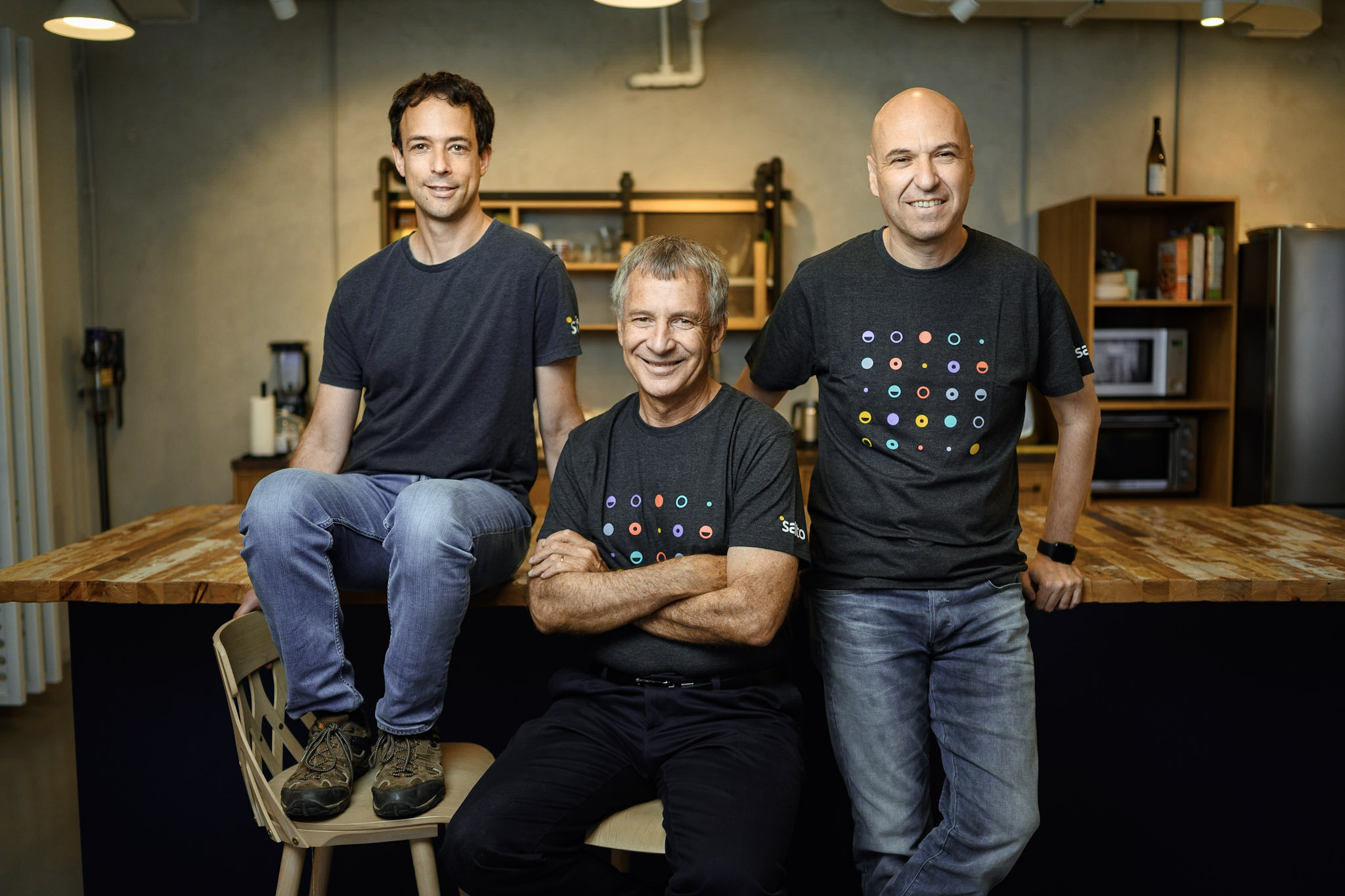
Team Salto in their Tel Aviv office

Around 10 years ago, I was lucky(!) enough to have the task of configuring Salesforce for our London team. While a great tool for many organizations of all sizes and across all industries, “lightly” customizing Salesforce for Accel’s internal use cases was neither a quick nor fun experience. Far from it. Fast forward to today, and the pain point is still here, but we now have a technology team to implement and run our tech stack, which includes, Salesforce, Netsuite, Slack, and many others. And while Salesforce has made some improvements when it comes to user experience, it still requires quite specific knowledge of its rules and syntax.

You might well ask: why is this more of a problem today than it was a few years ago? The answer is the cloud. As cloud computing and applications have become more prevalent in every size and type of company, configuring these applications remains a pain point that business operations and IT departments know all too well. And the configuration headaches don’t stop following the initial integration, they continue over applications’ years of use. To give some examples, Salesforce, NetSuite, HubSpot, ServiceNow, Workday, Coupa, Zuora, Workato, Marketo, Jira, Zendesk, Oracle, SAP Ariba and SuccessFactors, MSF Dynamics, SharePoint, and many others, form the core infrastructures of large and small companies worldwide. And yes, they all need to be configured to different degrees in order to address specific business needs. Some companies have up to 250 of these cloud applications and the configuration work gets even more complex when we think about cross-configuring those applications. For example, linking a certain Workday ID field with a Salesforce instance within the same organization, so when updating one custom field the system remains consistent and the process doesn’t break.

Today, the business application configuration problem is predominantly solved with the help of professional services. These include a mixture of implementation and configuration offerings from the cloud vendors themselves, along with system integrators. Technical teams that offer these services are usually trained and certified, for example, Salesforce and ServiceNow developers.

Given how complex some of these cloud application implementations and configurations are, the revenue pool is vast. To provide more color, the global Salesforce Services market alone is estimated at $14.5bn today, with Salesforce itself earning approximately $1bn in service revenues in the last year. There are multi-billion dollar service organizations built around the cloud application configuration market and, if we consider how many cloud applications there are, it’s clear this is one of the largest markets in technology that’s remained almost undisrupted since the cloud was born.

Enter Salto. Co-founders Rami, Benny, and Gil - who previously built virtualization software company Ravello together (acquired by Oracle in 2016) - set out with the vision of bringing the same workflows and speed of release associated with DevOps into business application configurations. This would enable a more coordinated integration and configuration approach across cloud application silos, offering better visibility, speed, and consistency when adding and/or customizing cloud apps within the broader tech stack of businesses of all sizes.

To achieve this, they and the Salto team created a platform that extracts the configuration of tools such as Salesforce, NetSuite, and HubSpot via each application’s APIs. It then translates the configuration into a standardized readable file in a proprietary declarative programming language (NaCl, for “Not another Configuration Language”). The user can then edit the file to change the single cloud app configuration, as well as creating cross-app use-cases (e.g. Salesforce + Workday) and managing very complex tools such as CPQ. This is a powerful offering for any business operations or IT professional who wants to both visualize and amend/push in production configurations of business applications without having to know each application’s specific language and syntax.

"Over recent years we have seen big organizations adopting hundreds of business programs. Salto is the missing link as it applies principles ranging from software engineering to organizational data systems"

- Rami Tamir, CEO

We are excited excited to be partnering with a world-class team that has the bold vision, ambition, and determination to build a category-defining software business that creates value for users, cloud application vendors, and the entire ecosystem around them. Just as Snyk revolutionized the security industry by empowering developers, we believe the Salto team can revolutionize the business application configuration category, shifting it from a service to a software-addressed problem.

Congrats Team Salto for this $42m financing: onwards! 


******************


Monday, January 25, 2021

Meet the new Cloud Unicorn from Israel: Melio raises $110m to transform B2B payments


The first time I met Matan, the founder of Melio, he told me that his mission was simple: he wanted to “help small businesses stay in business” by making B2B payments fast, simple and flexible. Coming from PayPal, Matan saw no reason why small businesses couldn’t pay their bills as easily as consumers send money on Venmo - in just two clicks. And he and his co-founders Ziv and Ilan made it happen: Melio’s now processing multi-billion dollar payment volumes less than two years after launch. 

On the back of this momentum, Melio today announced a $110m funding round, rocketing the company to a valuation of $1.3b just months after it came out of stealth. When Accel led Melio’s series B last year, we had high expectations for the company and its vision but didn’t imagine it would become one of Israel’s cloud unicorns in such a short space of time.
Bringing the consumer payment experience to small businesses

When you think of the B2B payments industry, words such as “simplicity”, “flexibility”, “speed’ and “efficiency” are likely far from mind. It’s an industry that’s long been in need of digitisation and many businesses still find themselves wading through piles of paper invoices, manual processes and managing heterogeneous payment cycles. More than 40% of B2B transactions in the US, which is roughly a $25 trillion market, are still made with paper checks compared to 5-7% for consumers. We think this gap will reduce dramatically in the next few years.

For small businesses, the pain is even more acute as - on top of the inefficiencies of traditional payment processes - their survival could be at stake. Managing the timing of payments is critical and can have dire consequences. For example, if you’re a wine retailer in New York, missing a payment to your supplier by just one day means that your next shipment will have to be paid on delivery, putting a huge strain on your cash flows. With typically no in-house accounting and finance teams, and traditional accounts payable (AP) automation solutions like Bill.com not meeting their flexibility and cash flow control needs, small businesses are still writing and posting checks to pay suppliers, a process exacerbated by the coronavirus pandemic. Living in a socially distanced world puts the ability to manage payments remotely and digitally, as well as greater cash flow control, in the spotlight. From March to August 2020, Melio saw payments volumes increase by 700% as US small businesses rushed to find a solution to pay their suppliers online.

With Melio, small businesses can now pay their bills for free using a bank transfer or debit cards, payment approval workflows can be easily set up and due dates managed - all via one cloud platform.


Leveraging consumer P2P and design principles (Matan previously led Consumer P2P Payments at PayPal), the Melio team has given small businesses an easy-to-use app that places cash flow control back in their hands. Now processing multi-billion dollar payment volumes, Melio’s monthly active users (MAU) grew by more than 2,000% in 2020 as more US small businesses made the leap to digital payments. The company also secured a partnership with Intuit Quickbooks to provide its bill payments capabilities inside its flagship accounting solution, making it even easier for small businesses to schedule and send payments.
Fintech stack shifting to the cloud

From the outset, Melio’s broader platform vision of enabling B2B payments in a contextual way has been key. Building a ubiquitous platform that enables B2B payments at the right time and place, integrating with other suppliers’ offerings, improves the customer experience, extends Melio’s reach and fuels the rise of adoption within vertical SaaS products. The integration of Melio by Vinosmith is a good example.

Melio is the poster child of one of the key trends highlighted in the Accel 2020 Euroscape: the fintech stack shifting to the cloud. In the past, the complexity of monolithic banking and payment infrastructure made it difficult for non-financial institutions to develop financial services. Today, modern API-first platforms make it possible for many cloud companies to integrate payments and banking services. We expect this trend to disrupt banks and insurance, and give rise to a new generation of fintech infrastructure companies. Melio is at the forefront of this digital transformation.
Primetime for Israel’s Cloud ecosystem

Melio’s meteoric journey is one more proof point that the Israeli Cloud ecosystem is at its prime. Israel produced three public cloud companies - Wix, Jfrog and Varonis - representing an aggregated market cap of more than $25b, c. 25% of the value of the 10 public cloud companies born in Europe and Israel. And the good news is that the next generation is growing fast: the Accel 2020 Euroscape, which analysed data from 1 January - 30 September 2020, revealed the number of Israeli cloud unicorns tripled vs. 2019, accounting for more than a third of unicorns created across Europe and Israel. These unicorns include Snyk, RedisLab, Monday.com, Gong, Sisense, WalkMe, AppsFlyer and SentinelOne.

The amount of money poured into the Israeli Cloud ecosystem also increased 160% over 2019 reaching $3.4B over 190 rounds. This number represents c. 35% of the combined European and Israeli Cloud market for the first nine months of 2020. Not bad for one country!


Israeli cloud companies also tend to raise larger rounds at the earlier stages and 2020 was no exception. With an average deal size of $17.5m, Israeli cloud financing rounds were 46% larger than their European counterparts (average of $12m in 2020). The number of rounds over $10m was also twice as big in Israel as it was in Europe.


When it comes to mega-rounds (more than $100m), our Euroscape analysis shows that Israel is the clear winner with 11 financings vs. a total of 24 for Europe and Israel combined. A big congrats to these amazing companies (AppsFlyer, Gong, SentinelOne, Snyk, Biocatch, Fabric, Pagaya, RedisLabs, Sisense, Vast) which have raised a combined $1.6b. These 11 mega-rounds compare to three for the same period in 2019. It’s also worth noting that in 2020, four of the 11 rounds - Appsflyer, Gong, SentinelOne and Snyk - were more than $200m!

***********************

The future of the Israeli cloud ecosystem looks increasingly bright and we can’t wait to see what 2021 brings! We couldn’t be more excited by what’s going to come next and feel fortunate to have witnessed the incredible growth of the ecosystem in the past few years. The days where Israel was known only for its cybersecurity entrepreneurs is behind us.

Thank you and congratulations to all of the cloud entrepreneurs who have worked hard to make this happen and, in particular, to the Melio team for their fantastic success and for pioneering a new transformative category: “keeping small businesses in business!”