Thursday, October 01, 2020

Snyk: How Freemium Can Help Your Start-up Grow from Series A to $2.6B in 30 Months


Snyk was founded with the mission to help developers make their code secure, providing a platform to automatically assess and remediate open source vulnerabilities.  The company’s success has been largely driven by its developer-led freemium model, going from Series A funding to a valuation of $2.6B in just 30 months.

Accel had the chance to lead Snyk’s Series A 30 months ago and then the Series B a year later, before the company reached unicorn status with its $150m Series C in late 2019. It recently announced the closing of a $200m round at $2.6B.

Earlier this year, I was on a panel with Guy Podjarny, Snyk’s founder, at SaaStock Remote to discuss how the team’s community-driven freemium approach led to the company’s stellar growth. Here’s a short summary of the discussion:


Guy, you launched Snyk in 2015, and a large part of your success was driven by your freemium model. With COVID, we’re getting into a world with tighter budgets and likely longer sales cycles. How can a product-led sales motion help in the current environment, and how important is a freemium model to drive product-led growth?

Guy: To give you more context, at Snyk, we have this interesting combination of user and buyer. The two aren’t the same. The most important user of our product is the developer. However, the entity in the organization with the job of keeping the organization secure and the budget to accommodate for that is the security team. As we wanted a direct path to the user to ensure we would be providing the best user experience, we decided to go for a freemium model to lower the bar for developers to get started. Today, we have around 1.5 million developers using our product.

Developers have no barrier to getting started with Snyk. By the time it gets to a purchase, there’s already some kind of conviction. Once we had the user (developer) and the buyer (security team) on board, the freemium model really accelerated and made it quite resilient to this crisis. It took us longer to get into revenue, but the freemium was a real accelerator for us.


What made you consider a freemium model rather than offering free trials? To some extent, we could argue that if you had set up a free trial, you could have gotten into revenue much sooner than you actually did. How did you think about this trade-off in the early days of Snyk?

Guy: This is a very important point, and we did spend a lot of time thinking about it at the beginning. Freemium implies you’re supporting certain use cases in the free tier in perpetuity. People who fit that use case don’t need to pay you. With a free trial, you’re giving somebody the ability to use the product, but you’re not really satisfying their needs.

It boils down to the use-case decision. The value of a free trial is that it's a quick and easy way to see your product and get a feel for it. It removes friction. The value of freemium is that you want that use case to generate a community. So you have to ask yourself if your free use case targets an audience large enough to create such a community.

We have two kinds of users at Snyk: the open source developers, who are never going to pay but will help build the community. They advertise to the world that this problem matters and that we're a potential solution to it and they help us make the product better. Then, they tell their friends.  Then,we have the developers in commercial entities, who see how our product can help make their organization more secure and will expand the service to their team and eventually become paying users.

The mistake  I often see is a freemium tier based on technical capabilities, which ends up not supporting any specific use case. This makes it hard to build a community of users and advocates. So, if you want to launch a freemium product, you have to ask yourself if there’s a large enough audience who can use the product for free for a long time.

We took advantage of the difference between our buyers and users to build our model and it’s worked out well so far.


To double click on your last point, in the freemium model, you have to accept that some users are just going to be a cost center for the company and never generate any revenue. The tricky question is how do you define the threshold of value you provide? I see a lot of early-stage companies struggling with this. Either they offer too much and never convert, or they don’t satisfy any free use case and can’t build a community. How did you define this threshold for Snyk?

Guy: You see this challenge all the timeOne of our key findings was that we wanted to appeal to developers, so we modelled our product based on the developer’s playbook. We built a company and product that looked like the ones other developers look up to and have earned their trust, like Atlassian, Twilio or GitHub.

The idea was that you get a free tier, then at some point, you start paying for a certain volume of usage. We tried that at first. It failed spectacularly. What we learned is that you need to come back to the core use case. In the world of security, there’s a certain threshold you have to reach to get the development team to use the product. When you want them to buy, they need a certain breadth. We needed to broaden the offering before we could sell it by adding the main languages and platforms support. We ended up collapsing our first paid tier into free and focused on the larger tier for monetization but at a much higher price by offering a much deeper offering.


In this journey, was there a point where you thought that freemium might not be the right way to go?

Guy: We set out to do something that really hadn’t happened yet. Developers usually don’t embrace security solutions. So, we focused all of our efforts on this issue. A year in, we had great usage and no revenue. We were very fortunate to have very supportive investors. We had tens of thousands of users, but investors had to take a leap of faith before we monetized. Once we hit that curve, it helped us fuel that growth.

In the developer world, it’s “Go Big or Go Home." You have to think about the use case, nurture the right community, provide the right functionality, and delineate from the premium elements. If you get it right, you can really go big.


If you put yourself in the shoes of the early-stage founder who is seeing their pipeline slowing down or their conversion rate going down because of the crisis we’re facing, how should they think about it? How do you know if your product or use case can be a good fit to support a free product?

Guy: You’ve got to focus on the audience that’s likely to convert. If the audience isn’t big enough to support conversions, you’re probably better off offering a free trial. Freemium needs a substantial audience.

If your challenge at the moment is lead generation, I’d suggest building side tools that are in your space and that would draw in the right type of people. You’re asking the same type of questions about the use case but you don’t have to bet the entire business model on it. Providing free tools allows you to provide value and strike up a conversation.


A lot of Snyk’s success was based on the developer community that you have built. What’s your top tip for building a high-value developer community?

Guy: The developer community has a very low tolerance for hype of vaporware, so you have to be authentic. When you work with developers, you have to provide true value.

Weaving yourself into the daily lives of your developers is very important. But you have to understand how you fit into this world. If you’re coming into their ecosystem and you’re running it down, you’re going to have a very short shelf life.


***********************

I hope this will help you better design your own model for success. If you want to go deeper in some of the areas highlighted in the post, you can see the full fireside chat below


************************

Wednesday, July 15, 2020

Accel 2020 Euroscape: "Decacorn Unleashed"​ - Apply Now!


- This article was co-authored with my colleagues Varun Purandare and Candice du Fretay and published initially on Tech.eu. The Accel 2020 Euroscape will be presented at SaaStock in October.

Last year, we predicted it would take three years for Europe to mark its first Decacorn. We are so happy and excited to see how wrong we were, as it took less than 9 months! Following in the footsteps of consumer companies Supercell, Spotify and Adyen, UiPath became the first European SaaS decacorn earlier this week. With this milestone, Europe has clearly established itself as a key center for software innovation in the world. 

If we look back 10 years, it is amazing to see how far the SaaS ecosystem has come  in a decade. When we started to take stock of this progress four years ago with the first Accel Euroscape, the list of the top 100 cloud companies from Europe and Israel, we had great hopes and Europe delivered beyond our expectations.

So, what does the next generation of European SaaS companies have in store for us? 

This is what we will attempt to discover with the 2020 Accel Euroscape. 

Applications are now open, and if you think the name of your company should be on the list, you can apply HERE – applications will close on 9th September 2020. 

Similar to last year, on top of the 100 companies in the Accel Euroscape, we will release our Champions League of Unicorns and now Decacorns! Customer feedback will play a key role in our ranking as usual. We will be working closely with G2 to include their ratings in our ranking.

2020 has been the best of times and the worst of times. The worst, because the global COVID-19 pandemic, on top of its impact on the health of millions of people, has created havoc in the global economy, triggering unprecedented levels of unemployment and destroying many small and large businesses. The best, because the confinement has accelerated digital transformation dramatically, achieving in two months what should have taken at least two years. 

As a consequence, SaaS public multiples and private company valuations are at an all time high, and the pace of cloud innovation is accelerating. The aggregate value of the 67 public cloud companies have surpassed $1T in February 2020 to reach $1.4T at the time of this post. In some areas like collaboration or health tech, the progress has been dramatic. 

For example, unicorn Doctolib added 31,000 new doctors in five weeks for its tele-conferencing service, seeing the number of daily calls jump from 1,000 to 100,000! At the same time, the government adapted the legislative framework to make sure patients would be fully reimbursed. 

While founders have been very quick to streamline their costs and prepare for the worst in the early days of the crisis, the demand for most SaaS products has continued to grow since the beginning of the year, and we have not observed the shock that we saw during the past crises in 2000 and 2008.

Indeed, all the traffic lights are green for the SaaS ecosystem (fingers crossed!). 

In the past 9 months, the 100 companies from the Accel 2019 Euroscape and the 13 “Champions” have raised c. $3B, including 11 nine figure rounds, in particular UiPath ($226m), Algolia ($110m) and Celonis ($290m), with 3 additional companies passing the $2B valuation mark. SaaS remains one of the top categories for funding in Europe and Israel with $6.1B raised since the beginning of the year, a jump of 25%+ vs. the same period last year, despite Covid.

2020 is also a remarkable year for our firm, as we are celebrating the 20th anniversary of our presence in Europe. As you can imagine, it has been hard for us to celebrate this milestone in the current environment, but after 20 years of helping software companies go global, believing strongly that the European software ecosystem would rise and reach the global stage, witnessing the first European Cloud decacorn is above any celebration we could have hoped for.

We will disclose the 2020 Accel Euroscape on October 12-14 2020 at SaaStock. This year, it won't be in Dublin but fully remote. 


Don't forget to tune in, and you can already register for an opportunity to attend for free (ADD LINK). On top of the list of the top 100 companies, we will present our analysis of the European Cloud ecosystem and how it was impacted by COVID 19.

Stay tuned and see you in October. Don't forget to apply HERE.


Tuesday, July 14, 2020

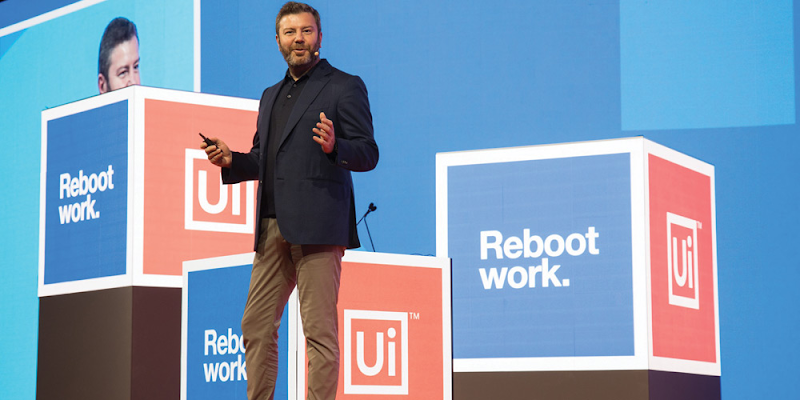
UI Path: the first European Decacorn is born


From Bucharest to the World


As we boarded our flight back to London in early February 2017, leaving behind the Bucharest winter, our team was incredibly excited by the two days we spent with Daniel and his team. Yet, it was hard to imagine that a short three and half years later UiPath would become the first European Cloud Decacorn.


What an incredible journey for this company born in Romania. This new financing of $225m valuing the company at a post-money of $10.2B is an incredible milestone, rewarding one of the fastest-growing cloud software companies of this generation.


This success is the testament of the hard work and relentless ambition of the founder, Daniel Dines and his co-founder Marius Tirca. Together, with a passionate and dedicated team, they pushed the limits of global growth, democratized the access to automation technology, and transformed the way enterprises of any size could harness the power of automation.

______________________________________________________________

"COVID-19 has heightened the critical need for automation...

we are committed to working harder to help our customers evolve,

transform, and succeed fast in the new normal"

Daniel Dines, founder UiPath

______________________________________________________________


We feel very fortunate and grateful to have been part of this journey from the early days, leading the series A in 2017 and the series B in 2018, and to have supported the company in every financing round since including the recently announced Series E this week.


While much of startup entrepreneurship activity historically centered in Silicon Valley, at Accel, we believed many years ago that Silicon Valley was not only a place but a state of mind. Technology entrepreneurship is exploding around the world and we seek to connect with the next generation of entrepreneurs everywhere, leveraging our offices in London and Bangalore. UiPath and Daniel Dines are the perfect example of a company founded locally but scaled globally.


It is a privilege to be working with this visionary team, and it has not always been an easy ride. Hypergrowth creates its own challenges and it is hard to build solid processes when you are running at 100 miles per hour. The company had to streamline its processes at the end of last year. Then came COVID, the black swan. And again, UI Path showed its resilience and adapted very quickly to this new environment, making some disciplined choices but emerging bigger and stronger, with more than $400m ARR run rate. 


Cloud Decacorn: big milestone for Europe


We all remember 10 years ago when the number one question was “Can Europe generate a $1B company”. Old times! With this financing, Europe is marking its first Cloud decacorn, following in the steps of Supercell and Spotify on the consumer side. This is a significant milestone for an ecosystem which has experienced exponential growth in the past decade.


The combination of strong tech Universities, the growing interest from large enterprises to embark on  their digital transformation and the rising level of ambition of the new generation of entrepreneurs creates a fertile ground for innovation.


The ecosystem, which was mostly centred around London and Tel Aviv 20 years ago, has become increasingly more fragmented with the emergence of 10-12 hubs across the region. Our last 25 software investments were based in more than 13 cities, including Altrincham outside Manchester and Aarhus in Denmark. It shows that innovation can come from anywhere in the continent and  “Silicon Valley” is a state of mind.


We came to Europe 20 years ago, and even though COVID 19 limited our ability to celebrate this milestone, witnessing the first European decacorn is above any celebration we could have hoped for. 


Global Cloud Factory 


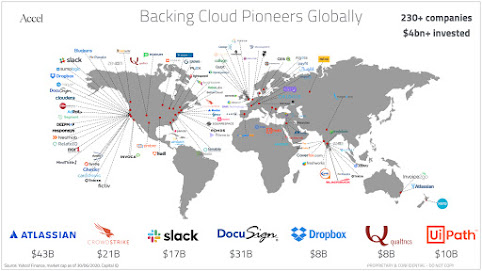
We are very happy to see UiPath, as a European company, join the Accel Cloud decacorn family with other leaders from around the world such as: Atlassian, Crowdstrike, Docusign, Dropbox and Slack. 


At Accel, we love SaaS and Cloud and have invested close to $4B in 230+ companies globally. We believe that category-defining companies are founded all over the world, and while the first Trillion dollars of cloud market cap has come mostly from US-based companies, we expect the next Trillion dollars to come from many hubs across the globe. These smaller hubs can shape companies with growth-oriented DNA because their founders are required to think beyond their local (often smaller) market to plan for a global business from day one. While Silicon Valley will remain an epicenter of technology innovation, we expect to see an acceleration of cloud entrepreneurship globally, following in the steps of UiPath in Europe, Freshworks in India, Xero in New Zealand and  Atlassian in Australia. 


Big congrats and thank you to Daniel and his team for this great success and for what it means for the European and global tech ecosystem, and we look forward to continuing our small role in supporting their journey.


__________________________________

“I want a robot for every person”

Daniel Dines, founder UiPath

__________________________________


***********************


Accel: from Silicon Valley to The World - Interview with Start-up Vision TV

I had the chance to share Accel's vision and talk about the evolution of the Tech ecosystem in Europe in the past 10 years. Fun discussion with Florence Klein of Start-up Vision TV. 


Monday, May 25, 2020

5 tips for SaaS businesses fundraising during COVID


As part of SaaStock Remote 2020, I spoke on a panel yesterday about something that’s top of mind for many early-stage SaaS entrepreneurs right now: is it possible to raise money from investors in the current environment?

At Accel, we love SaaS and have invested globally close to $4B in more than 230 companies over the last 35 years. Many great SaaS companies have emerged from the past two economic downturns. Some iconic businesses in our own portfolio like Atlassian or DocuSign, emerged off the back of the dot-com bubble, and Slack, Dropbox, Cloudera and CrowdStrike were founded after the 2008 financial crisis.

Now is actually a good time to raise money and, from what I’m seeing, the financing environment in Europe is quite active despite the lockdown. We’ve closed three deals in the past couple of months, one of which was done from start to finish remotely. We also have several portfolio companies which have raised rounds recently or are in the process of doing so. 

My response to the question “Can I raise money now?” 

is without hesitation "Yes, you can”. 


Here are five tips to make the process faster and shift the odds in your favor. 

Before starting the fundraising process

1. Do the hard things first 


If you need to readjust your plan or restructure, do it first and talk to investors after.

The current crisis is different from previous ones, because its impact has varied greatly across different sectors and businesses. On the software side, it ranges from:
A major boost for companies in healthcare (Doctolib, for example) 
Little to no impact in categories like automation (think RPA with UiPath or process mining with Celonis)
A moderate impact on most other SaaS categories: 10-20% reduction in new business
A harder impact on companies selling into verticals impacted by the crisis - like travel or retail - or segments which are more vulnerable, like small businesses

Across our portfolio, most companies have had to readjust their plan and reduce costs. This is the work you need to do before you consider fundraising. Even if you’re growing fast today, investors need to see that you are well set-up to tackle the unknowns in the upcoming quarters.

2. Clearly define your value proposition and the ROI for your customers 


As we enter a challenging economic environment, buyers will look for quick ROI.

Overall, Q1 was a good quarter, but the economic impact of the crisis will likely be stronger in the coming months. As enterprises accelerate their digital transformation, they will most likely see budget constraints and need to prioritize accordingly.

In this context, the most successful companies will be the ones that are able to show a strong ROI to their customers. If you have not built an ROI calculator for your sales team, now is the time. It will make a big difference. 

Make it specific, and the more factual inputs the better. You can also differentiate by vertical or size of customers. Use your creativity but being able to show a 10x return on investment will be the key to success in the coming months.

3. Be very selective about the funds/angels you approach 


Focus on existing relationships and funds with expertise in your area, as making decisions over video is hard and talking to the right people makes it easier.

In the current context where travel is limited or non-existent - at least for now - investors have to make their decisions purely remotely. In the same way it will be difficult for you to assess an investor over a video call, it’s also hard for investors to assess companies and founding teams. 

The two elements that can make this process easier are (1) if there were interactions in person before COVID and (2) if the investor has a deep knowledge of your area. It’s therefore crucial to be selective and filter the VCs you are talking to along these two criteria. 

Focus on the people you have met before that you liked; and screen investor websites to target the right funds or partner with expertise in your area. It will make the process much smoother.

During the fundraising process

4. Share good news soon and bad news sooner


Trust is key. The more you communicate during the process, the better.

We signed a term sheet with a company a week before the world locked down. This was not an easy situation for me or for the entrepreneur. Most of the due diligence conducted beforehand seemed irrelevant now, and we needed to reassess our investment thesis to see how it would work in this new world.

I was lucky to have spent a lot of time in person with the team, and I knew the trust we developed in the previous few months was not going to go away. But that trust, which is a critical part of any investment, can easily be broken with a lack of communication leading to misunderstandings.

We closed the deal a few weeks later and the most important factors for me throughout were the regular updates I had from the founder, and his transparency about everything happening with the business. The good, but most importantly, the bad as well. 

There is no such thing as over-communication right now, and it is never a good idea to hide or delay bad news. If you show the investor that you are transparent, you immediately have that level of trust which will make both sides more comfortable and on the same page.

5. Be patient: it may take more time than usual 


In today's world, where every day brings new developments and perspectives, things take more time. 

We live in uncertain times. Partnerships are asking more questions, as they are naturally more cautious about deploying capital. Don’t be discouraged – just know you might need to drill down further into certain aspects of the due diligence than you would in a different climate.

The current reality is not going to change anytime soon, but don’t lose faith in the process or forget that investors are looking to back the next generation of iconic SaaS businesses to emerge from this crisis. 

Stay on course, be patient and good things will happen.

I hope these tips are helpful and good luck for the fundraise. See you at SaaStock Remote 2020!

Any question, please reach out on Twitter @pbotteri

Friday, October 18, 2019

2019 Accel Euroscape – The Rise of Europe


The top 100 SaaS companies in Europe and Israel


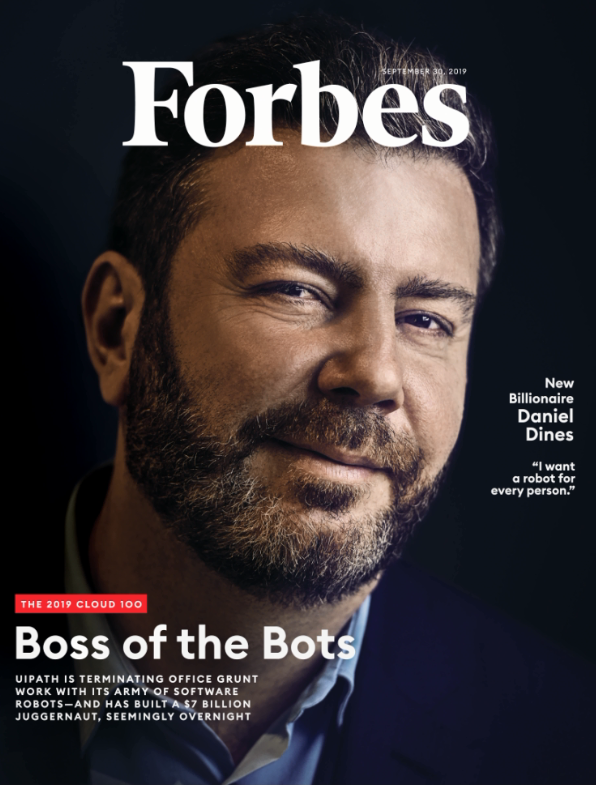
The European Software-as-a-Service world changed forever when Daniel Dines, the founder of UiPath, made the cover of Forbes as ‘Boss of the Bots’ last month. Who would have thought five years ago that a Romanian SaaS company would be valued at $7 billion and reach that valuation in record time?

It is prime time for European SaaS companies and the third edition of the Accel Euroscape, the list of the top 100 SaaS companies from Europe and Israel, shows the rising position of Europe on the global SaaS stage, benchmarks how European SaaS companies compare to their US counterparts and lays out five predictions for the European SaaS market. Full presentation available here.

Bigger, stronger, faster: SaaS continues to eat software

First, let’s zoom out and look at how SaaS companies have performed globally. Ten years ago, in October 2009, Salesforce was a dominant force among the 21 public SaaS companies, with a valuation that represented one third of their combined $22 billion market capitalisation. Since then, its market cap has grown 18x, reaching $130 billion, which is the fourth biggest for an enterprise software company right behind companies that are 20 years older, Microsoft, Oracle and Adobe.

Today, the landscape is very different. There are 66 public SaaS companies, representing a formidable $796 billion combined market cap, which is 36x bigger than the combined 2009 market cap! The new generation of public SaaS companies is also growing faster, reaching a $100 million revenue run rate in five to seven years today versus 10 to 15 years a decade ago.


Source: The Angel VC Blog, BVP SaaS benchmarking Oct. 2009, CapitalQ, Yahoo! Finance, Market cap as of Oct 2009 and Oct 7, 2019

This public market momentum is continuing to accelerate with 24 SaaS IPOs in 2018-19 compared to 17 in 2015-17. The 2018-19 cohort were valued at a combined $126 billion in market cap on their IPO day, which is 4.3x the value of the 2015-17 cohort, and six have crossed the $10 billion market cap threshold within a year of going public (Dropbox, Docusign, Crowdstrike, Slack, Datodog and Zoom), while none of the 2015-17 class did.

The rise of Europe
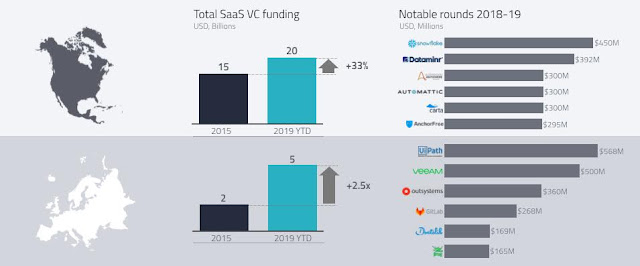
Against this healthy backdrop, let’s drill down into Europe. Venture investment in the region’s SaaS companies is growing quickly. From 2016 to 2019, it rose from $2 billion to $5 billion, growing much faster than in the US, which grew from $15 billion to $20 billion. It now represents one quarter of the US. European companies have been able to raise rounds as large as their US counterparts, and UiPath and Veeam top the list with $568 million and $500 million in total investment respectively.

This is mirrored by our own investment. Accel has invested 3.6x more capital into new European SaaS companies in the past five years than we did from 2010 to 2014, and our 28 newest investments have raised 5.3x more capital than those from the previous five years.


Source: TechCrunch, Crunchbase, PitchBook

 European SaaS companies’ growth is following suit, and they’re now growing at a similar pace to their US counterparts. Our analysis shows that when comparing the time to grow from $1 million to $10 million Annual Recurring Revenue (ARR) and then from a $10 million to $50 million ARR, they are neck and neck.

 
Source: Company data, S1 filings, CapitalIQ, Accel analysis, Bessemer Venture Partners

 Finally, while it is still early days in the public markets, as European SaaS matures, the path ahead looks promising. There are now seven European-founded public SaaS companies, with three of them above $5 billion market cap (Zendesk, Elastic and Wix) and 16 unicorns.

2019 Accel Euroscape: list of top 100 SaaS companies from Europe and Israel
Before diving into the list of top 100 SaaS companies, we looked back at our 2016 and 2017 editions to assess the companies’ track records. From a financing standpoint, 29 companies from the list have raised more than $100 million, and the list has raised a total of $9.6 billion collectively. There has been $4 billion of realised exits through 17 mergers and acquisitions, with Datorama (Salesforce, $850 million according to Reuters) and Demisto (Palo Alto Networks, $560 million according to TechCrunch) as the top two. In addition, the list generated 11 new unicorns (UiPath, Monday, DarkTrace, Intercom, Doctolib, JFrog, Celonis, Collibra, Sisense, TalkDesk and WalkMe).

 To design the 2019 list, we have surveyed more than 1,500 companies across the region. We have also limited the list to companies between $1 million and $50 million plus ARR. Companies above that revenue threshold and with high growth rate have made our ‘Champions League’ (see full presentation). These 13 companies have $19.5 billion plus in value, and we would not be surprised to see their IPO filings in the next couple of years.


Note: to create the list, we ranked each company by a set of criteria including market attractiveness, level of technology differentiation, strength of the team and initial traction (monthly recurring revenues and growth in number of employees). To improve the ranking, we have also worked with G2 to incorporate customer feedback. Nothing is perfect, and we might have missed some great companies. Your feedback is welcome!

The evolution of the list clearly shows the momentum we continue to see in the market, with key trends including:

·       There are strong players emerging from a diverse set of industries, from security to HR and marketing.

·       Close to 50% of the companies in the list are between $10 million - $30 million ARR and 40% have raised $15 million - $50 million already.

·       Geographically, while the UK and France remain strong with 24 and 21 companies respectively, Germany has been the fastest grower, going from eight to 17 companies.

What’s next?
These are strong upward trends for the European SaaS industry, but of course the big question is what does it all mean? When looking at the list, we see five trends that are likely to emerge.

1.     The rise of the bots: “I want a robot for every person,” Dines told Forbes during his interview. While Robotic Process Automation and process mining are leading the adoption curve, delivering unprecedented ROI to the enterprise, the rate of AI adoption is still very much on the cusp of explosion. With more than 50% of companies across sectors at the evaluation stage and less than one third considering AI as a mature practice, we think we are about to see a fast pace of adoption. And yes, we agree with Daniel that there will be a lot more bots in the enterprise in the near future, as AI comes of age.

2.     Ubiquitous APIs: with Amazon Web Services reaching a $34 billion revenue run rate, Stripe and Twilio valued close to or above $20 billion and the next generation of companies emerging, APIs are now foundational to the development of cloud computing and their adoption will only accelerate. We will see a new generation of API companies emerging from Europe, with companies like MessageBird and Algolia already showing great promise.

3.     Security shifting left: writing code is good, but writing secure code is much better, and it costs six times less. While there are so many industry-focused predictions we could make, we are only going to highlight one in security, an ever increasingly important industry: correcting security flaws early in the development cycle vs. the operating and monitoring stages will become mainstream. Currently emerging, with companies such as Snyk and ShiftLeft, we see this trend as a key tenet for the next generation of leading security companies.

4.     Market correction: while the momentum is strong, valuation multiples are way above their median level and more and more funding is going into the company lifecycle early. There will be a market correction, and while we don’t know if there will be a hard or soft landing, our advice to companies is to take advantage of the environment and raise capital now, while making sure that they have solid control of their cash burn.

5.     European SaaS decacorn: European companies are getting bigger faster, and we believe Europe will generate the first SaaS decacorn in less than three years and the first SMB SaaS decacorn in less than five years.

 And, one bonus prediction: each company mentioned in the 2019 Accel Euroscape will receive 100 plus calls and emails from VCs!


******************

Friday, July 12, 2019

The rise of European SaaS: apply now to be included in the Accel Euroscape 2019


-This article was co-authored with my colleague Maxim Filippov and published initially on Tech.eu.
Nominations are now open for the 2019 Accel Euroscape, the annual list of the top 100 cloud companies originating from Europe & Israel. You can apply HERE – applications will be open until 6th September 2019.
The growth of the cloud ecosystem in Europe over the past few years has been explosive. We first started capturing the growing momentum in 2016 with our list of the top European SaaS companies emerging from Europe.
Fast forward three years – Europe has proven that it can produce amazing global software companies. For example, UiPath, the leading Robotic Process Automation company from Romania, valued at $7 billion, may well be one of the fastest-growing enterprise software companies of the decade, with revenues growing from $5 million to $200 million in around 30 months.
In just the past couple of years, companies from our 2017 Top 100 list have raised $4.6 billion, including several nine-figure rounds with UiPath ($568 million and $225 million both in 2019), Doctolib ($174 million in 2019) and Jfrog ($165 million in 2018). These financings have generated seven new unicorns, including UiPath, Darktrace, Doctolib, Intercom, TalkDesk, Celonis and WalkMe.
As researched by Tech.eu alongside Stripe, the SaaS category consistently ranks in the top 3 for funding in Europe, both for early-stage startups (more than €800 million invested from 2015 to Q2 2018) and growth-stage scale-ups (€2.5 billion+ invested from 2016 to 2018).
The strategic interest in European companies has also accelerated. Out of 100 companies from our 2017 list, 10 have been acquired, the largest acquisition being Datorama (acq. by Salesforce for $800 million), Demisto (acq. by Palo Alto Networks for $560 million), NewVoiceMedia (acq. by Vonage for $350 million) and Peopledoc (acq. by Ultimate for $300 million).
Accel has been on the ground in Europe backing the best founders and helping software companies go global for the past 20 years, believing strongly that the European software ecosystem would rise and reach the global stage. And this year, we can finally say that’s happened.
Calling the leaders
Applications for the 2019 Accel Euroscape, spotlighting the top 100 Cloud companies from Europe and Israel, are now open, and you can apply HERE.
To maximise exposure for the winning companies on the final list, they will be featured by Tech.eu on 15 or 16 October and announced live on stage at the 2019 edition of the SaaStock conference in Dublin.
Customer feedback will play a key role in our ranking this year. We will be working closely with G2 to include their ratings in our ranking. Winning companies will get mentions to their product profile on G2.
As the ecosystem is expanding, we will create two additional categories this year, next to the Top 100:
– The Champions League: list of pre-IPO companies close to or above the $100 million recurring revenue mark
– The Next Gen: list of 10 most-promising companies with recurring revenues run rate of less than $1 million
The core list of the Top 100 will have similar criteria as previous years. Any company with north of $1 million in recurring revenue run rate will be considered.
Our previous edition featured companies that have since gone on to re-define their categories. If you think your company deserves to be on the list, join us by applying HERE.

See you soon for more!

Friday, June 14, 2019

Fiverr rings the NYSE bell

Micha Kaufman, Fiverr's founder and CEO
What a great achievement for Micha Kaufman and the whole team at Fiverr, which made its debut on the NYSE today. They have built a company that is changing how the world works together, and which facilitate millions of transactions between buyers and sellers across over 200 categories.

We first invested in Fiverr and its team of 40 in May 2012. Today the team supports a global network in more than 160 countries, and the platform has facilitated over 50 million transactions – between 5.5 million buyers and 830,000 sellers – opening up a new universe of talent for companies, and potential clients for independent workers.

When Fiverr began in 2010, e-commerce platforms existed to sell products. Micha, along with co-founder Shai Wininger, had the vision to see that the same was possible in services – productizing them so that buyers could enjoy the speed and efficiency of an online retail experience when shopping for talent. 
 
As a repeat entrepreneur, and having previously run a start-up accelerator, Micha knew from experience the difficulty of sourcing contractors for a growing business, and the time it took to identify and manage independent workers through traditional channels. Fiverr was created as the solution to that problem. Its core innovation has been to package up services into product categories it calls Gigs – such as app development, logo design or video production – allowing buyers to browse for specific skills, just as they would search and shop on Amazon. They called it “Service as a Product” and their vision set them on a path to transform the traditional freelancer staffing model.
Fiverr started selling its Gigs for $5, giving its name to the company. The pricing model quickly evolved to multiples of that and today the platform is used by buyers of all sizes, from small companies to global brands such as Netflix and Google with prices in the thousands of dollars with gigs ranging from logo design to translations to branding services.
For its sellers, it has been a catalyst for growth, with numerous stories of people who have used the platform to successfully launch a freelance career, or rapidly grow their small business. From an SEO and web analytics expert in Spain relying exclusively on Fiverr to sell its services in 80 countries to a logo designer in Israel who increased her income about four times by selling her services on the platform, Fiverr has opened new horizons for the growing new generation of freelancers across the world.
 
Micha ringing the bell with top Fiverr sellers
 
Fiverr has made big strides towards its mission: to change how the world works together. This journey has been supported and driven by strong and distinctive values. These include ‘we are doers’, symbolising a culture which is all about execution, and enabling customers to get things done; ‘think simple’; and ‘stay awesome’, reflecting Fiverr’s commitment to help its employees and users be themselves and tap into their creativity. This open and diverse culture is immediately visible when you spend time at Fiverr’s Tel Aviv office, a free-flowing environment complete with a community space for buyers and sellers from the platform to meet. 
Congratulations Team Fiverr on this milestone, a testament to what clear vision, strong values and consistent execution can achieve. A Fiverr value I haven’t yet mentioned is ‘making impact’. In the fast-changing world of work, Micha and the team have lived up to that many times over.
 
***************************